Retirement and Saving Decisions by Low- to Moderate-Income Households
Partners
North Carolina State University Stanford University Institute for Economic Policy Research University of Pennsylvania Wharton School of Business
Summary
Research conducted to understand the benefits of financial itinerary education for low- to moderate-income (LMI) adults, for those experiencing poverty dynamics, and those identified as vulnerable groups. Research areas focused on household savings, personal finance, financial distress, private pensions, and financial resilience.
Overview
Grant Duration
Phase 1: September 1, 2019 to February 31, 2024 Phase II: Sept 2023 to Sept 2026
Phase 1
In the summer of 2019, the Institute of Consumer Money Management awarded a four-year grant to North Carolina State University with Robert Clark as the Principal Investigator. The research team included co-PIs Annamaria Lusardi of George Washington University (and since September 2023, Stanford University) and Olivia S. Mitchell of the University of Pennsylvania. The proposed research consisted of two nationally representative surveys of individuals aged 45 to 75, examination of five important research areas, and a capstone conference.
Using some carry-over funds, the research team conducted a third survey and built a longitudinal data set consisting of 2,279 respondents who were interviewed each year between 2020 and 2022.
Phase 2 (2023 – 2026)
In 2023, ICMM awarded the research team a second three-year grant to study “Financial Literacy and the Economic Wellbeing of Low- and Moderate-Income Households.” The grant funded two more Understanding America Study (UAS) surveys, fielded in 2024 and 2025, and had two goals. The first was to test whether short online stories that teach financial concepts help people retain what they learn over several years. The 2025 survey also tested which people choose to accept brief, optional financial advice and whether that advice improves their decisions. The second goal was to examine how the financial wellbeing and preparedness of Black and Hispanic households changed during and after the COVID-19 pandemic, using a larger sample of these groups in the surveys.
Research Outcomes
Across both grants, the team produced 16 papers: 14 published in peer-reviewed journals and two working papers. ICMM’s funding also supported five national UAS surveys (2019, 2020, 2022, 2024 and 2025). Many of the same people answered each survey, which created a longitudinal dataset that follows households as they approach and move through retirement. All five surveys are publicly available through UAS, and 266 researchers have already downloaded them.
ICMM funded research has broken new ground in understanding the role of financial literacy on economic decisions, the importance of households becoming financial resilient, and factors that influence pension distributions
Tri-University Team, Final Report Executive Summary
New Initiatives
Based on our strategic model of bridging research and practice, we initiated a new RFP to engage a field expert to analyze the Tri-State research papers, with a specific emphasis on translating foundational findings into practical solutions. We funded Boston College’s Center for Retirement Research to translate these findings into applied work and policy changes in 2025. From that work, we began a partnership with NFCC to examine a new program called Wealthbuilder, which helps people on a DMP to also generate emergency savings over time.
This 7-year project came to a close on September 2026. A final report was provided by the researchers, which is currently being reviewed and translated into a public-facing press release. Additionally, the 16 total papers and 5 representative surveys that came from this research grant will be consolidated and shared on a publicly available page soon.
Research Studies
The proposal identified a number of research areas evaluated during this project. During Phase 1 of the grant, the Tri-University team completed a ICMM-supported Capstone Conference, 16 Presentations, and nine published articles based on ICMM-supported Grant Research.
Research Area 1
How do transitions from work to retirement affect the wellbeing of LMI households?
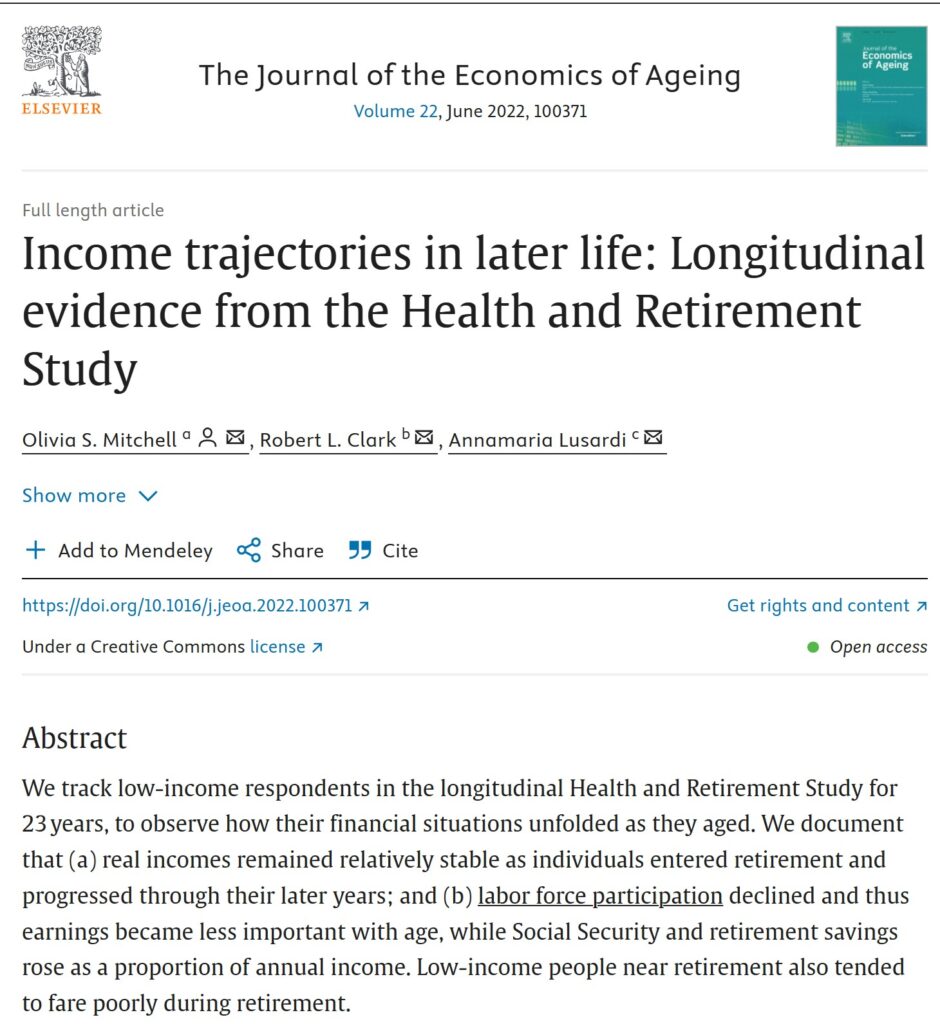
This research project documented and explained how the income of older Americans changed as they approached retirement, left the labor force, and lived during their retirement years. One paper examines entry rates into and exit rates from poverty.
Income Trajectories in Later Life: Longitudinal Evidence from the Health and Retirement Study
Survey drop-out biases estimates of who exits poverty in old age, which matters for how researchers measure older Americans’ poverty risk.
Research Area 2
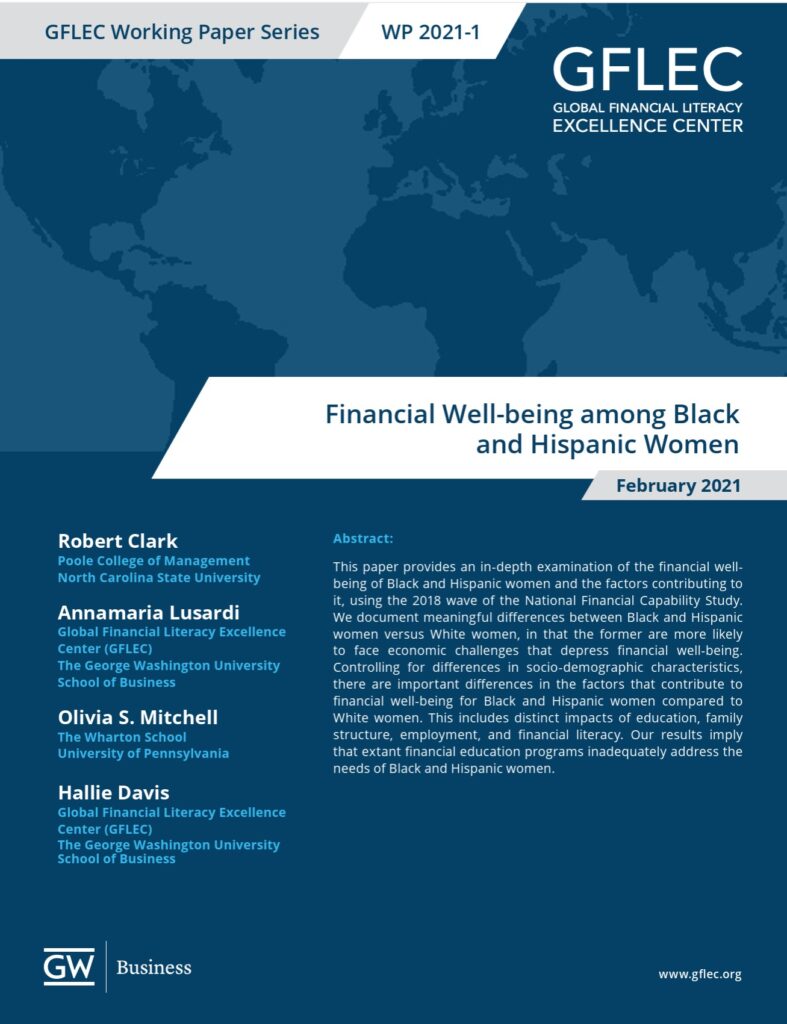
Factors driving financial wellbeing among Black and Hispanic women
This research project showed how the economic wellbeing of Black and Hispanic women changed during recent years and what factors were the main drivers affecting the variation across households. While only one paper is listed under this project, all of the papers listed in this report carefully examine differences by race and ethnicity.
Factors Contributing to Financial Wellbeing among Black and Hispanic Women
Education, family structure, employment and financial literacy shape well-being differently for Black and Hispanic women than for White women, and existing financial education does not fully meet their needs.
Research Area 3
Trends in LMI household income during retirement: Financial resilience and shocks
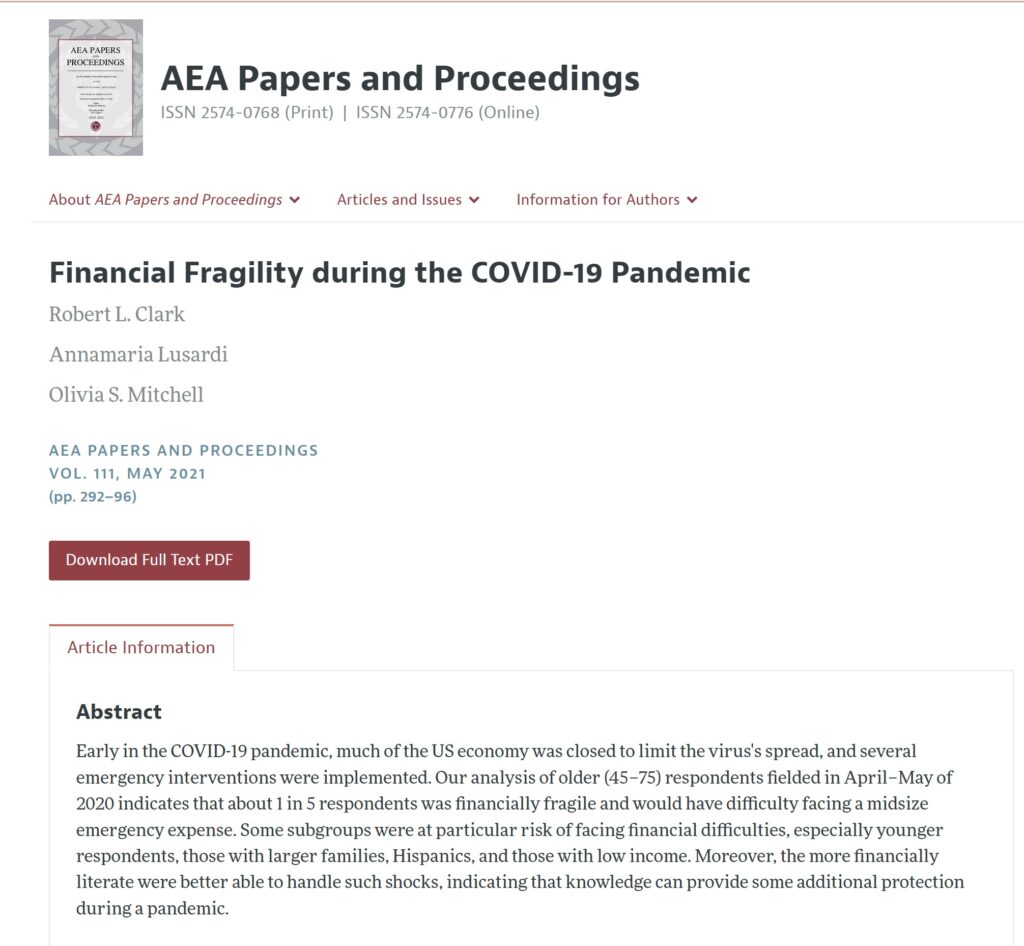
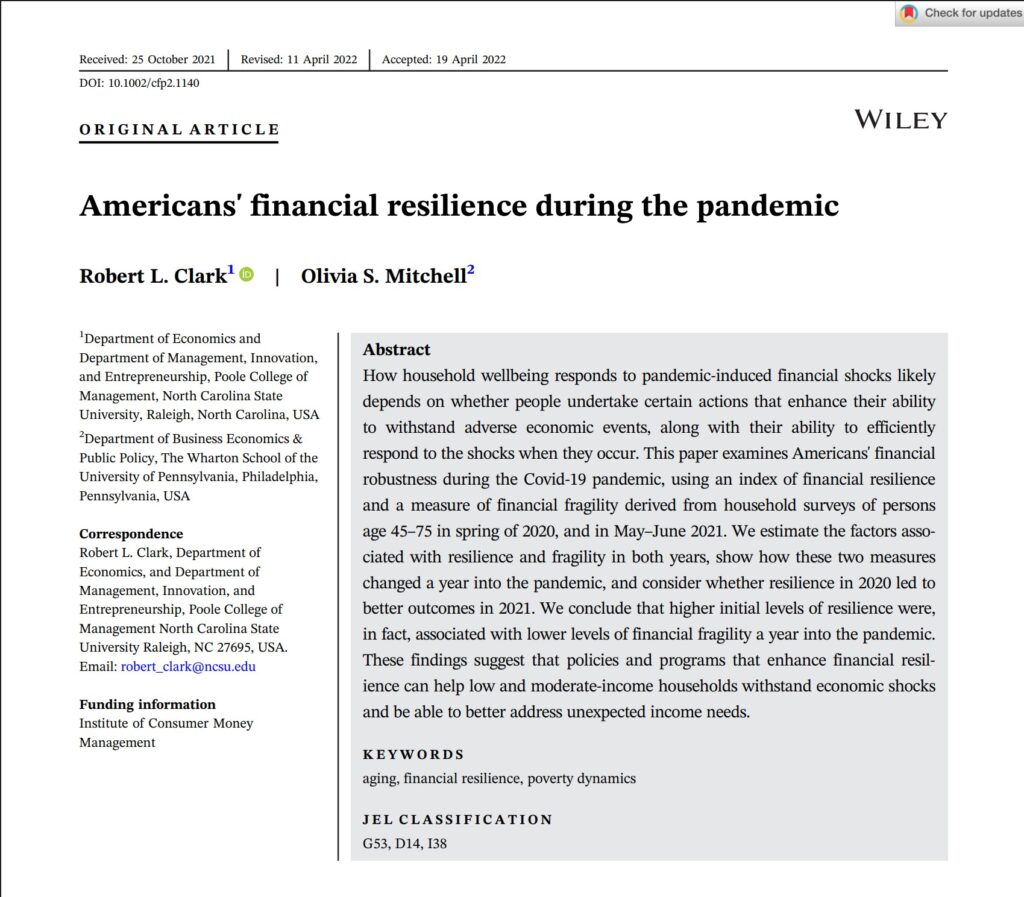
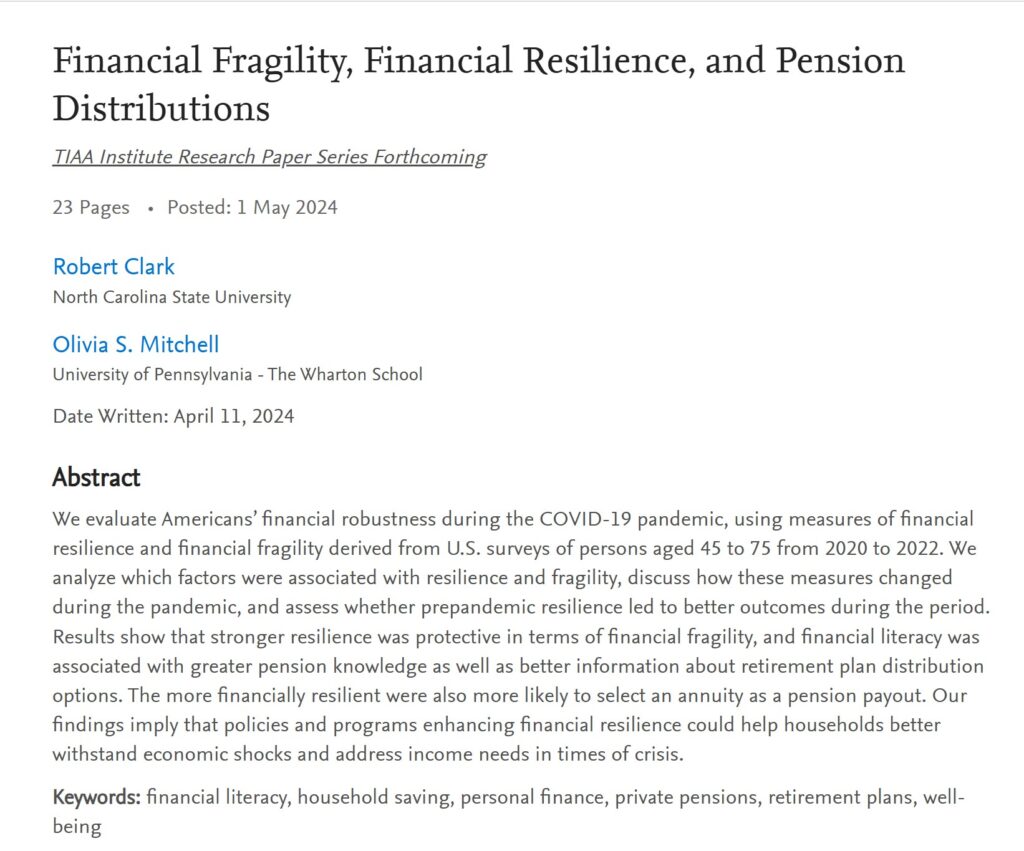
The research under this project focused on how older Americans were affected by the health pandemic and the resulting economic shocks. A specific focus of the research was how households prepared for adverse economic events. We created a resilience index, showed that resilience affected key economic decisions and that respondent scores on this index was stable over time.
About one in five Americans aged 45–75 were financially fragile early in the pandemic; the more financially literate were better able to absorb the shock.
American’s Financial Resilience during the Pandemic
Across four survey waves (2020–2024), greater financial resilience led to better outcomes after economic shocks for Black, Hispanic and White Americans.
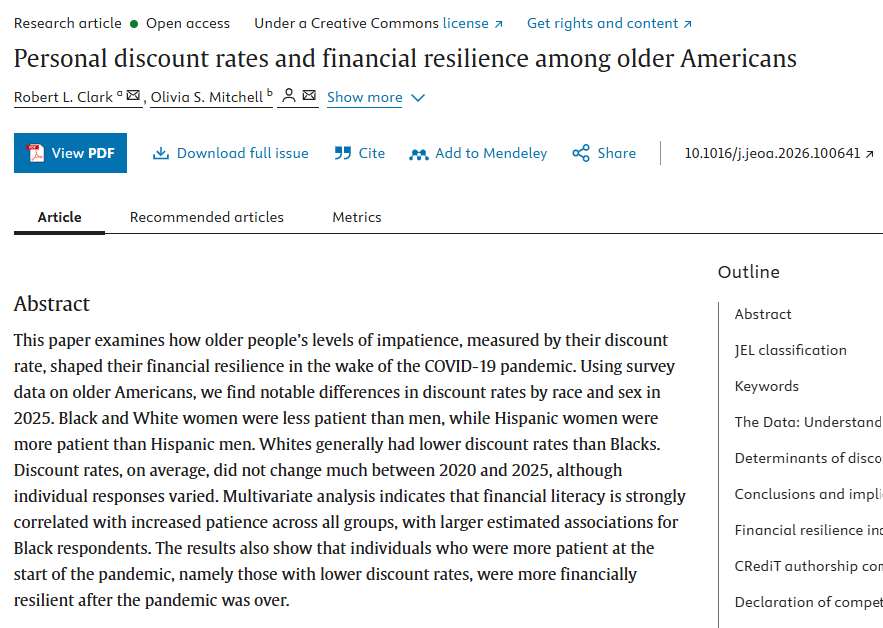
Personal Discount Rates and Financial Resilience among Older Americans
More patient people at the start of the pandemic were more financially resilient by 2025, and financial literacy is linked to greater patience.
Research Area 4
Distribution choices from retirement plans
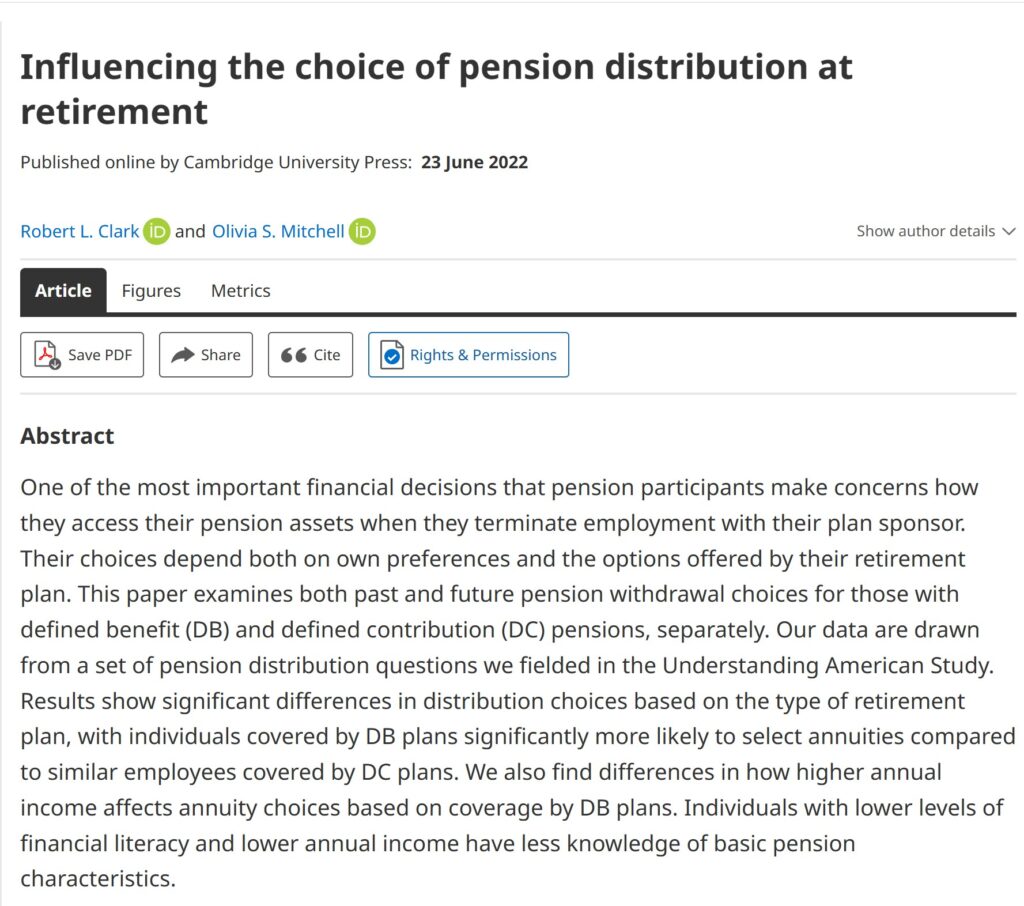
One of the most important decisions older Americans must make at retirement concerns how they access their pension wealth. Only a few studies have examined the distribution choices from pension plans. The primary choice is between selecting an annuity or taking a lump sum distribution. Our research investigates the drivers of this choice.
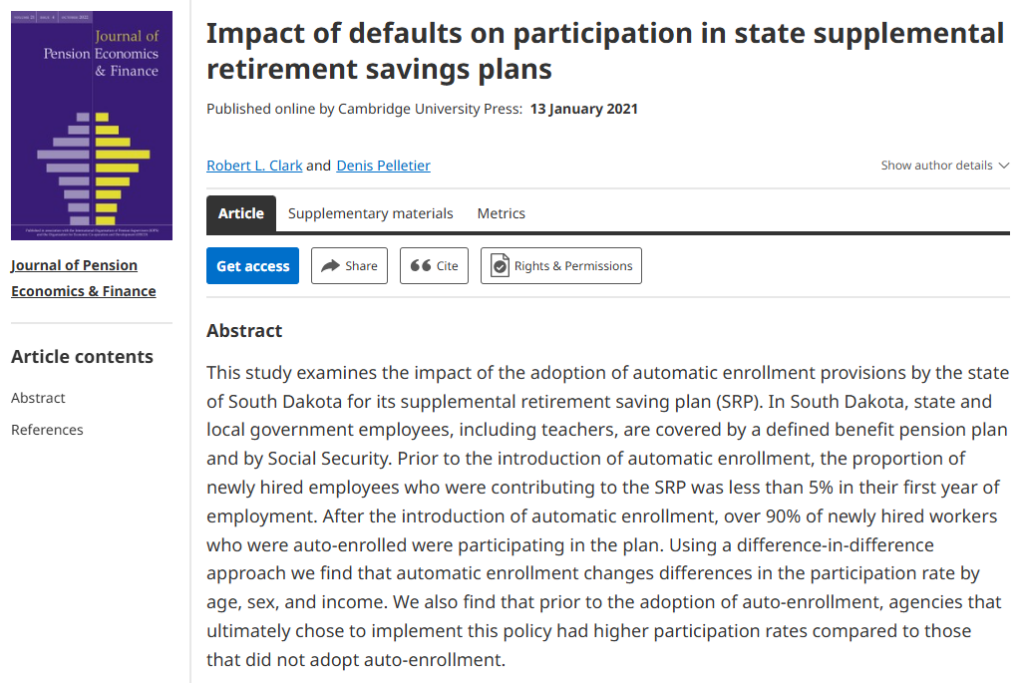
Impact of Defaults on Participation in State Supplemental Retirement Savings Plans
Workers with defined benefit plans are far more likely to choose annuities than those with 401(k)-style plans, and less financially literate workers know less about their pension options.
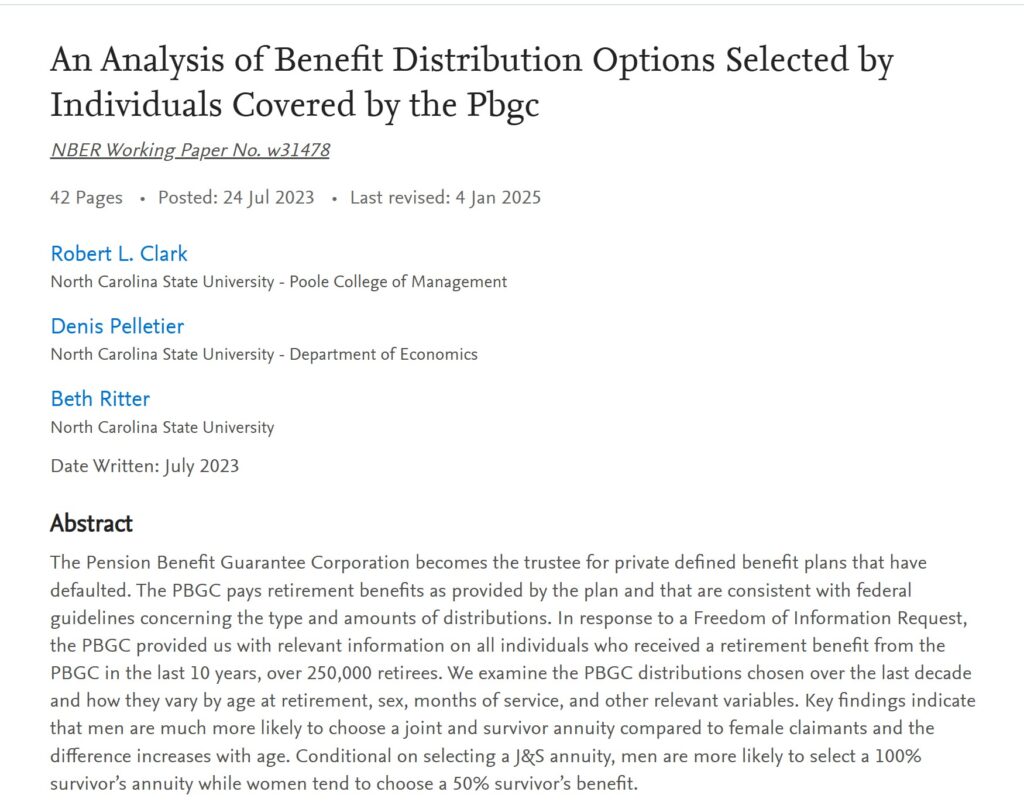
An Analysis of Benefit Distribution Options Selected by Individuals Covered by the PBGC
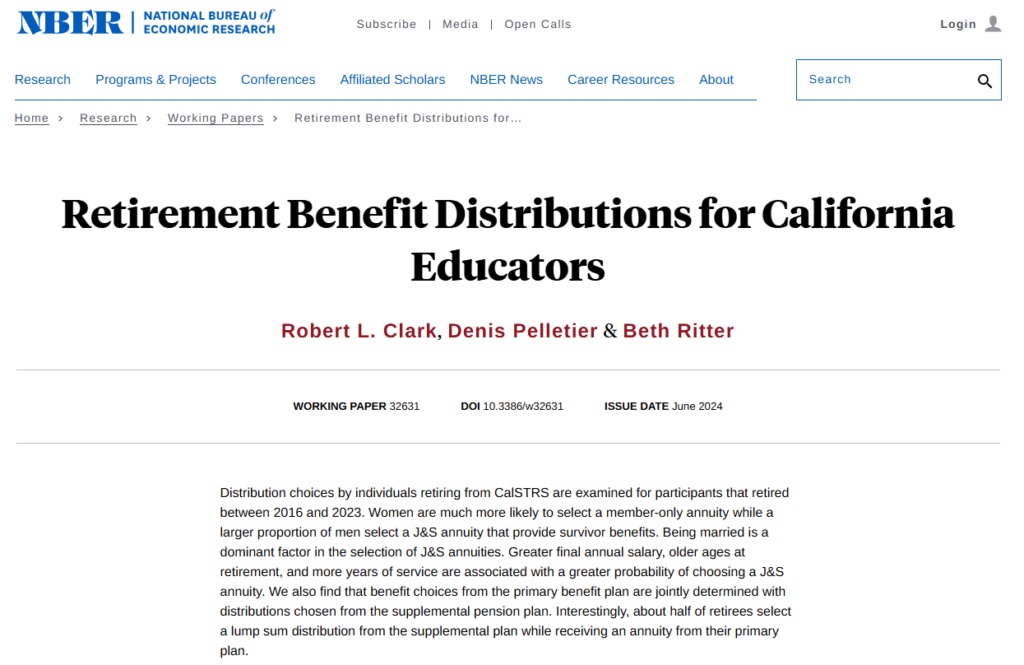
Among CalSTRS retirees, women more often chose a member-only annuity and men a joint-and-survivor annuity; about half took a lump sum from the supplemental plan.
Research Area 5
Financial Education & Advice
Surveys in this project focused on the effect of low-cost financial education programs on financial literacy and economic decisions. Our results provide evidence that even short and low-cost financial education interventions can improve people’s financial knowledge, providing evidence in support of financial education programs.
Evaluating the Effects of Low-Cost, Online Financial Education Program
Two-minute online stories raised financial knowledge; the risk-diversification lesson held up best over eight months.
The Long-Run Effects of Story-Based Financial Education
Robert Clark, Annamaria Lusardi, Olivia Mitchell, Ozyilmaz, and Andrea Sticha, 2026 working paper, forthcoming.
In a four-year experiment, the diversification lesson was still detectable after three years, and a brief re-read restored it to near its original effect.
Selection into Advice: Evidence Across and Within Individuals in Financial Decision Support
Robert Clark, Jung, Annamaria Lusardi, Olivia Mitchell, Ozyilmaz, and Andrea Sticha, 2026 working paper, forthcoming.
Two-thirds of people offered brief advice took it and decided more accurately, but overconfident people were the least likely to ask for help.